


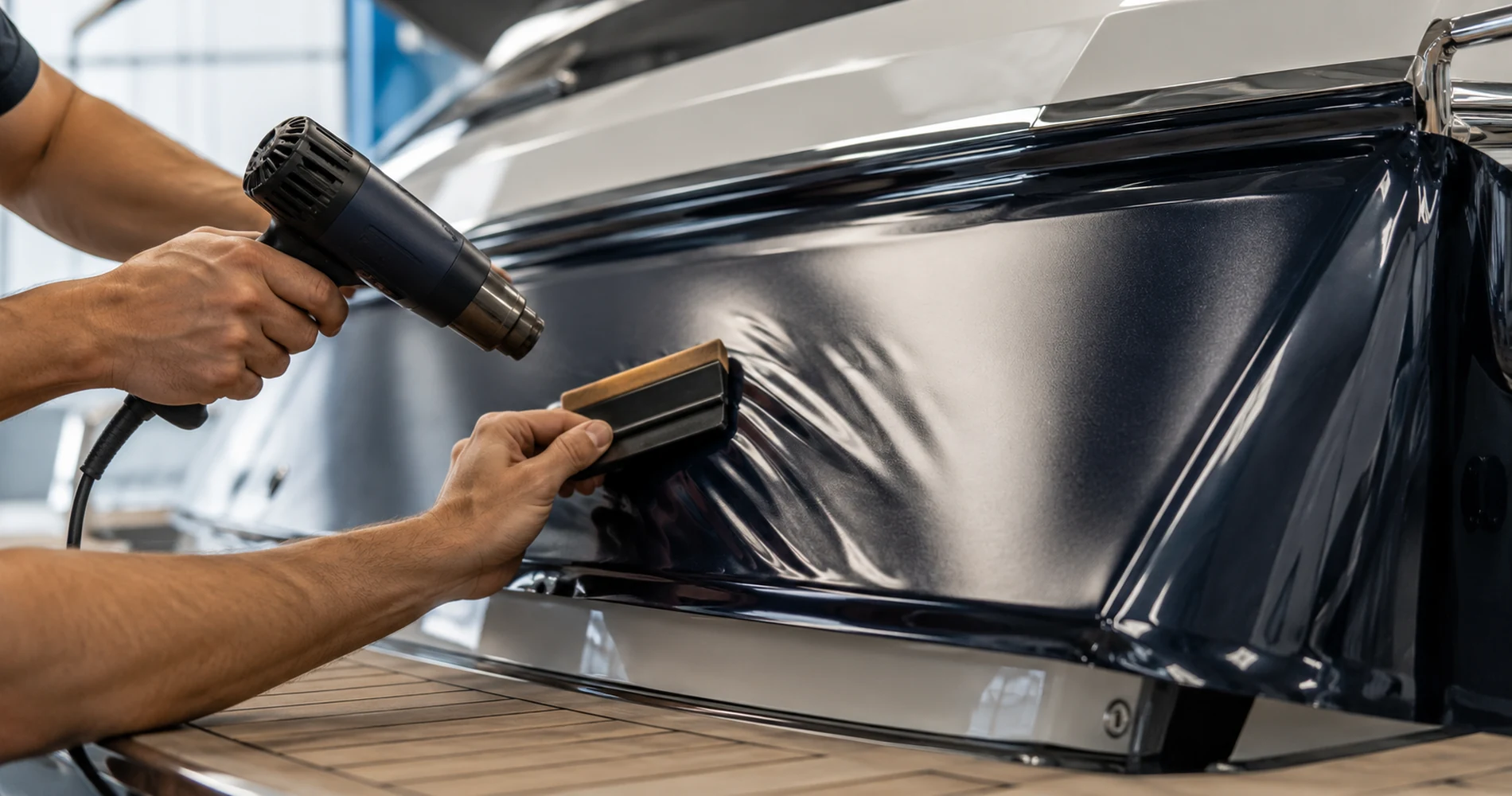
Boat Wrapping: A Flexible Alternative to Repainting
Boat wrapping is a practical alternative for owners who want to change the look of a vessel without the time, cost and permanence of repainting. Whether the goal is a new colour, a cleaner finish, branding, partial styling or surface protection, wrapping gives boat owners more flexibility. With boat wrapping, a vessel can be visually upgraded while keeping the original paint or gelcoat underneath.
Why Owners Choose Boat Wrapping
Traditional repainting can be a major project. It often requires sanding, masking, controlled conditions, curing time and extended downtime. For many owners, that level of disruption is not necessary. Wrapping can achieve a strong visual transformation faster, depending on the boat’s size, condition and complexity. This makes it useful for private boats, tenders, day boats and commercial vessels that need a fresh appearance.
A boat wrap can cover large exterior panels or selected sections. Some owners choose a full colour change, while others prefer stripes, accent panels, brand graphics or protective styling areas. The service can be tailored to the boat’s shape and use. For example, a tender may need a durable and distinctive look, while a larger yacht may need a refined finish that matches the main vessel.
Marine-Grade Materials
The quality of the material matters. Marine environments are demanding. Saltwater, UV exposure, heat, cleaning products and constant movement can affect the performance of the film. Premium cast vinyl films are often preferred because they can conform to curves and provide a smoother finish. Cheaper films may look acceptable at first but can fail sooner, especially around edges, curves and high-exposure areas.
Preparation is also essential. The surface must be cleaned, inspected and degreased before installation. Wax, salt, oxidation, silicone and previous coatings can interfere with adhesion. If the surface is damaged or heavily oxidised, preparation services such as Yacht Polishing may be needed before wrapping begins.
Wrapping and Protection
Boat wrapping can help reduce direct exposure of the original surface, but it is not the same as dedicated impact protection. For areas where dock rash, rope contact or frequent handling is expected, owners may also explore Marine PPF. Paint protection film is designed for transparent protection in vulnerable zones, while wrapping is usually selected for colour, design and general surface coverage. Used correctly, both solutions can complement each other.
Installation quality determines the final result. The film must be applied with correct tension, heat and edge finishing. Boats often include curves, rails, vents, handles, portholes and fittings that make installation more complex than a flat panel. A professional installer plans how the film will sit, where joins will appear and how the edges will be protected.
Maintenance After Installation
After wrapping, maintenance should be simple but careful. The boat should be washed with mild products and soft cloths. Harsh solvents, abrasive brushes and aggressive polishing should be avoided. Pressure washing should be used with caution around edges. With proper care, a wrap can keep the boat looking fresh and professional.
Boat wrapping is also useful for resale and presentation. A clean, modern finish can improve first impressions, especially when the boat is listed for sale or used for charter. Because the wrap can often be removed professionally, owners keep more flexibility than they would with a permanent repaint.
For owners who want a smart, flexible and visually powerful upgrade, boat wrapping is worth considering. It can refresh the vessel, support surface care and create a distinctive look without unnecessary downtime. To plan the right finish, explore Boat Wrapping and request guidance through the Contact page.