


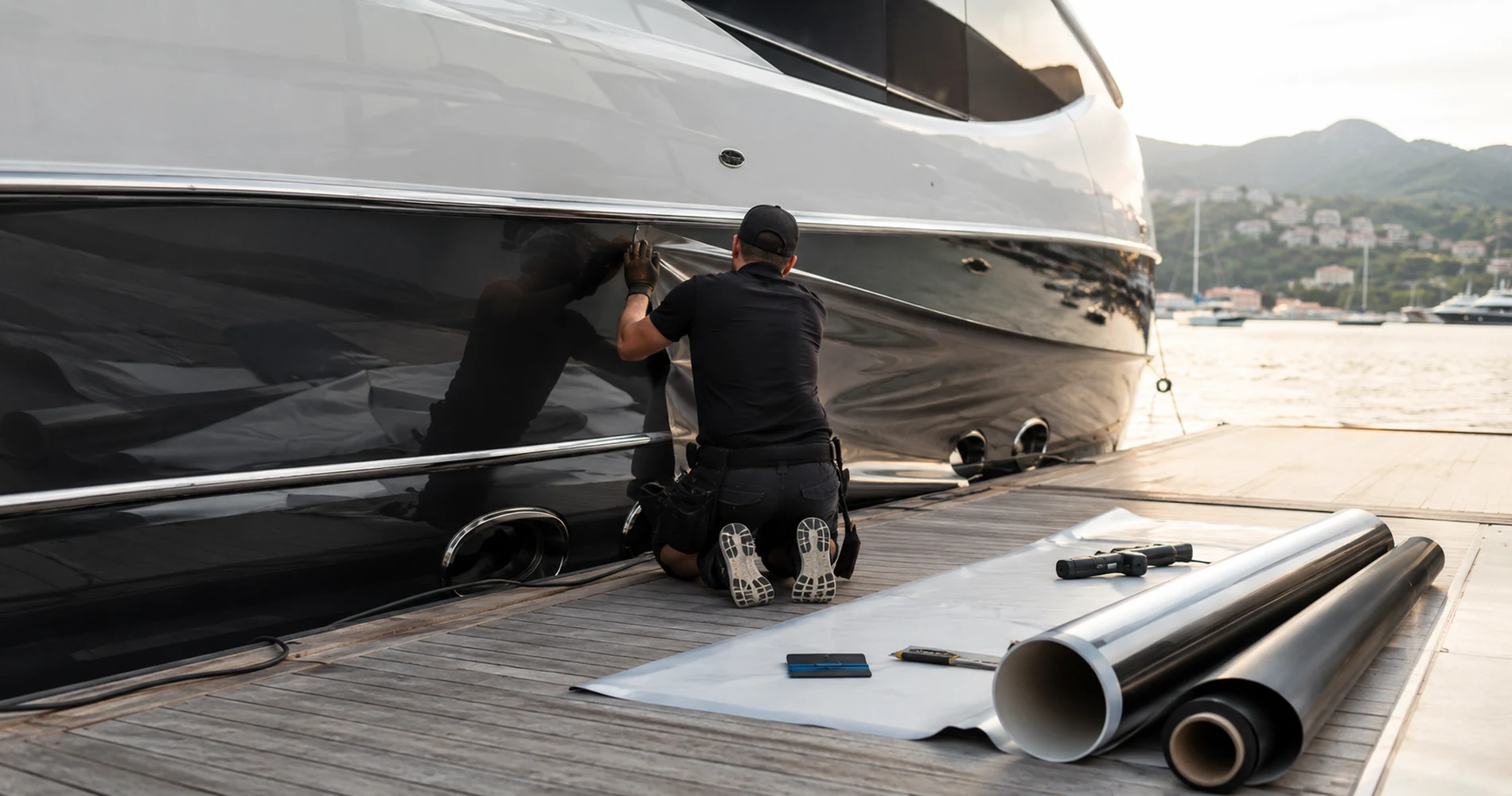
Yacht Wrap Colours: How to Choose the Right Finish
Choosing yacht wrap colours is one of the most important decisions in a wrapping project. The colour and finish will define how the yacht looks at the marina, on the water and in photographs. A wrap is not only a practical surface solution; it is also a design statement. With the right Yacht Wrap, a vessel can look newer, more elegant and more personal without a full repaint.
Gloss, Satin, Matte and Metallic Finishes
The first decision is the overall finish. Gloss films create a polished and classic look, often closer to painted surfaces. Satin finishes feel modern and understated, while matte colours create a bold, contemporary effect. Metallic films can highlight the yacht’s lines and add depth, but they require careful installation to keep the direction and reflection consistent. Textured films, such as carbon-inspired or brushed finishes, are usually better for details than large hull sections unless the design calls for a very specific visual identity.
Colour selection should also respect the yacht’s architecture. Long, clean hull lines can look elegant in deep navy, charcoal, silver or black. Smaller boats may benefit from brighter or more dynamic colours. Superyachts often need restraint because the finish must look premium from both close range and distance. A good wrap should enhance the shape of the vessel rather than overpower it.
Practical Maintenance Considerations
Practical maintenance matters too. Dark colours can look dramatic, but they may show salt, dust and water marks more easily. Very light colours may be easier to maintain visually but can require more frequent cleaning in polluted marinas. Metallic and satin finishes may need specific cleaning methods to preserve their appearance. Before selecting a colour, the owner should discuss how the yacht is used, where it is moored and how often it is cleaned.
Materials are a major factor. Premium marine-suitable vinyl films offer better colour stability, conformability and finish quality than cheaper decorative films. The adhesive system, film thickness and surface technology all affect the final result. For large exterior areas, the material must be able to follow curves and resist lifting at edges. With Exterior Yacht Wrapping, the difference between a good film and an average one becomes obvious over time.
Combining Design and Protection
The design can also combine wrapping with protection. A coloured wrap gives the yacht a new look, while protective films may be used in high-contact areas. Marine PPF is especially relevant where the owner wants transparent protection over paint or vulnerable surfaces without changing the appearance. In many cases, wrapping and protection can be planned together so style and durability work as one system.
Another point is resale. A well-executed wrap can improve presentation and make a yacht feel more current. Since the original surface remains underneath, future owners may have more flexibility than with a permanent colour change. However, the design should still be tasteful if resale is a consideration. Very personal colours or complex graphics may reduce broad appeal, while refined marine tones usually feel safer.
A professional sample review is strongly recommended. Film samples should be viewed in natural light, ideally near the yacht or in similar outdoor conditions. Owners should look at the colour in sun, shade and reflection. A small sample can also be placed against existing trim, windows, decks and hardware to confirm harmony.
Yacht wrap colours can completely change how a vessel is perceived. The right choice makes the yacht look newer, more elegant and more aligned with the owner’s style. The wrong choice may feel disconnected from the design. To choose confidently, start with Yacht Wrap options, compare finishes and speak with the team through the Contact page before approving the final colour.