


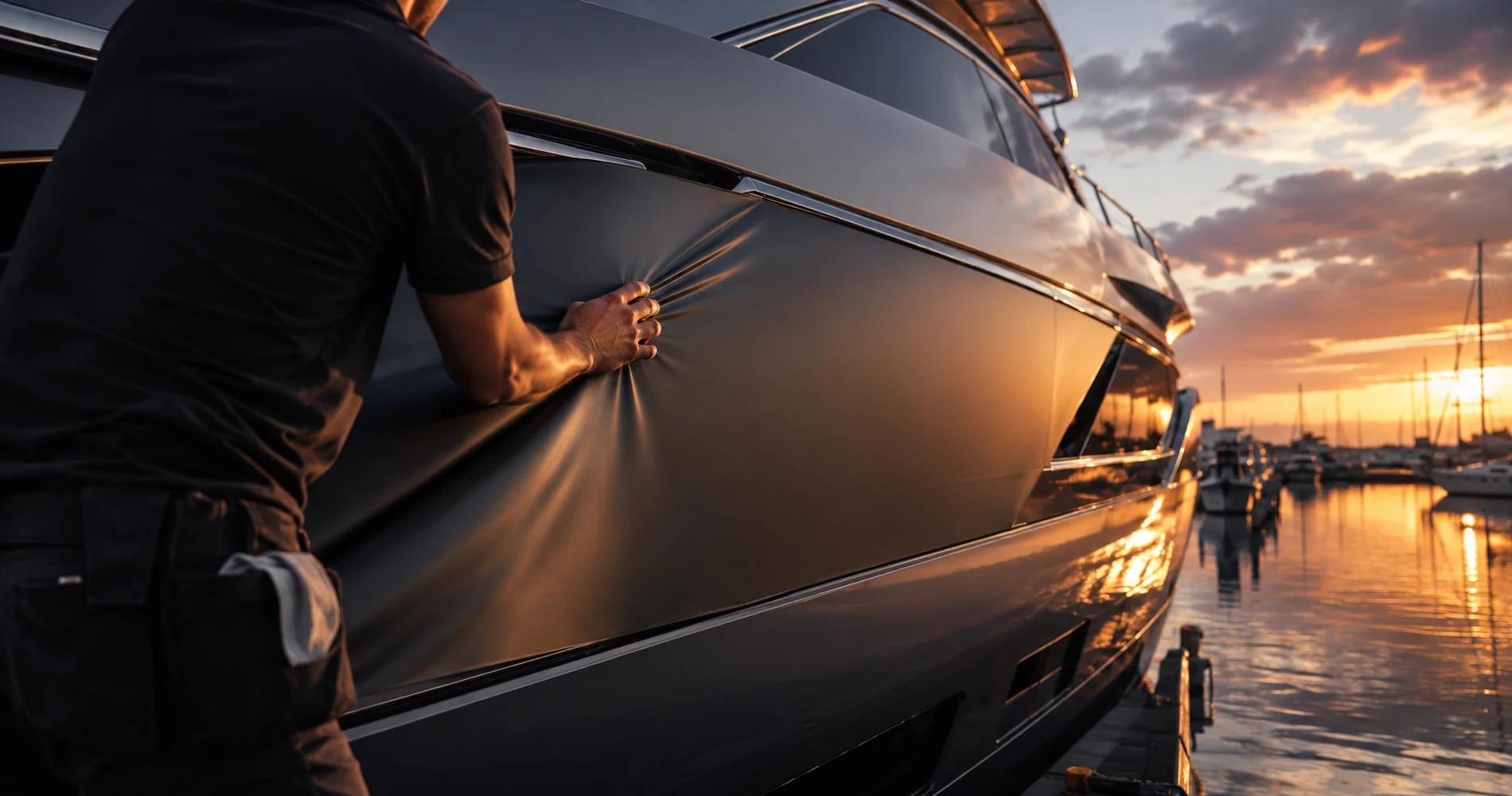
Yacht Polishing Before Wrapping: Why Preparation Matters
Yacht polishing is one of the most important preparation steps before wrapping, coating or any premium exterior surface work. Many owners focus on the final colour or finish, but the quality of the result depends heavily on the condition of the surface underneath. If the hull is oxidised, contaminated or uneven, even the best film may not look as refined as expected. That is why Yacht Polishing should be considered early in the project plan.
Why Surface Preparation Matters
A yacht’s exterior surface is exposed to sun, saltwater, humidity, cleaning products and regular handling. Over time, gelcoat and painted surfaces can lose clarity, develop dull patches or collect contamination. Before wrapping, the installer needs a clean and stable surface. Polishing can help improve gloss, remove light oxidation and prepare the yacht for the next stage of work.
Preparation is not only cosmetic. Wrap adhesion depends on the surface condition. If wax, silicone, salt, compound residue or dirt remain on the hull, the film may not bond correctly. Edges can lift, bubbles can appear and the final finish may fail earlier than expected. A polished and properly cleaned surface gives the installer a better foundation for Exterior Yacht Wrapping.
Choosing the Right Polishing Method
The polishing process should be matched to the surface. A lightly dull hull may need a different approach from a heavily oxidised one. Painted surfaces, gelcoat and wrapped panels all have different limits. Too aggressive polishing can cause damage, while too little preparation may not solve the issue. Professional assessment helps determine the correct method, products and tools.
Polishing can also reveal problems before wrapping begins. Scratches, repairs, cracks, uneven paint and previous damage may become more visible during preparation. This is valuable because it allows the owner to decide whether repairs are needed before the film is applied. Wrapping over defects may hide some minor visual issues from a distance, but it will not correct structural or surface problems.
For premium projects, polishing is part of a larger workflow. The surface is inspected, cleaned, corrected where needed, degreased and prepared for installation. The wrap is then applied with attention to alignment, tension and edge finishing. After installation, maintenance instructions are provided so the crew can protect the finish. Skipping preparation to save time often creates more problems later.
Polishing, PPF and Long-Term Presentation
Polishing also matters when the project includes protective products. If the owner plans to use Marine PPF in high-risk zones, the protected surface should be as clean and refined as possible. Paint protection film is transparent, so imperfections underneath can remain visible. Proper polishing helps ensure the surface below looks worthy of protection.
Another benefit is resale presentation. A polished and properly wrapped yacht gives a stronger impression to buyers, guests and charter clients. The vessel looks cared for, modern and professionally maintained. Even if wrapping is only applied to selected panels, polishing the surrounding surfaces helps create a consistent overall appearance.
Owners should avoid treating polishing as a quick wash or simple shine. It is a technical preparation process that can influence adhesion, finish quality and long-term satisfaction. The right team will advise whether polishing is necessary, what level of correction is suitable and how it fits into the wrapping schedule.
For any yacht owner planning a wrap, the best results begin before the film is installed. A well-prepared surface helps the wrap look smoother, last better and reflect the premium character of the vessel. To plan the correct sequence, review Yacht Polishing and discuss the project through the Contact page before choosing the wrap colour or finish.